

Women have a crucial role to play in facing the climate crisis, and their leadership and decision-making are needed for an effective climate action.
African climate advocates and feminist activists are now participating at the United Nations Climate Change Conference (COP27), addressing their concerns, methods and suggesting solutions to achieve climate and gender justice.
On Monday, November 14, 2022, our coordinator Siouar Doss, took part in the panel discussion “Confronting the Climate Crisis: Investing in the Power of African Women & Girls” organized by ‘The Climate Mobility Pavilion’. The session opened the floor for women in positions of leadership to share their vision for a just climate action and their thoughts on how to elevate the contributions of women in mitigating the impacts of climate change, and building a sustainable climate resilient Africa.
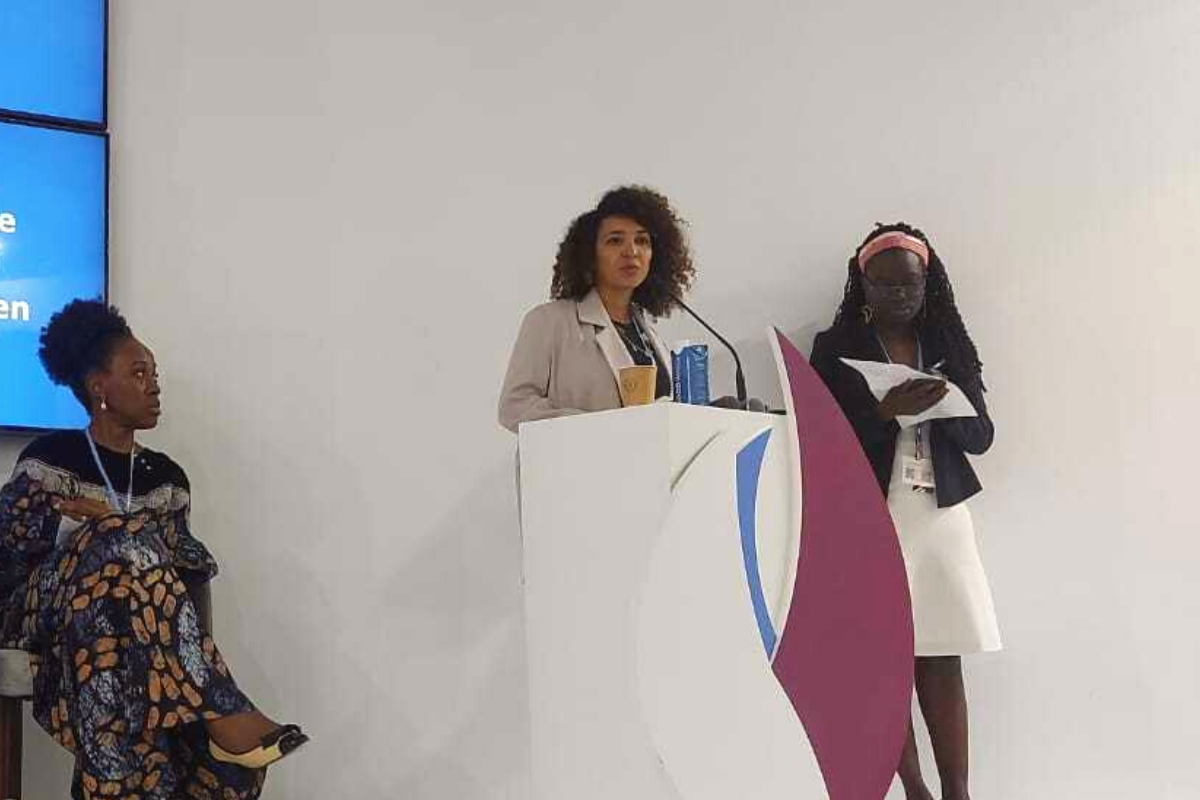
The Nalafem coordinator tackled various topics during the panel concerning women and the climate crisis including the critical importance of education and financial freedom for young women and girls in Africa. In addition, she highlighted the significant impact of flexible funding and mixed monitoring methods to track progress in centering gender equality in climate action.
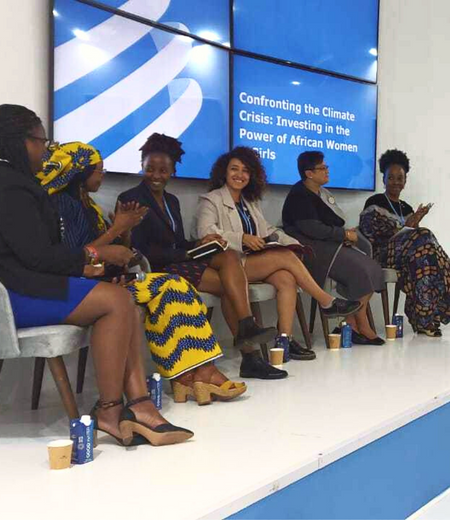
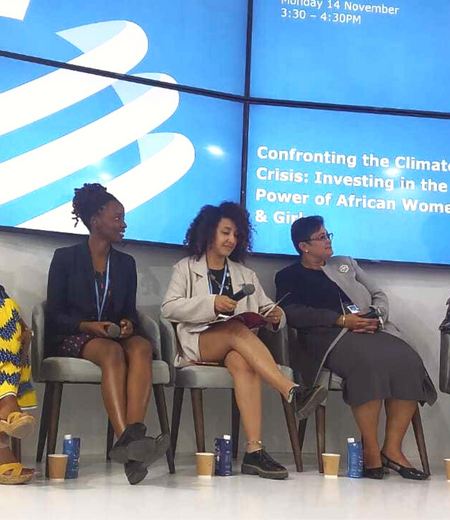
Many questions were discussed in the session regarding women’s vision of Africa, how climate change is affecting women’s aspirations and what are their strategies for achieving them, how can women leaders affect change for the vulnerable women in Africa including displaced women and girls, the needs of African leaders and activists to tap and expand their activities to make progress.
Answering some of these questions, Siouar Douss highlighted the role of Nalafem in carrying inter-generational discussions and offering women a platform and space to tell their stories and to be involved in finding and suggesting solutions to the issues that affect them the most.
She also addressed the need for developing national climate learning strategies that are gender-transformative and recognize the importance of women intergenerational leadership by prioritizing civic engagement, green skills, life skills, policy processes, and activism, and meaningfully engage girls and young women in the development of these strategies. Besides addressing the importance of having cross-country commitments based on feminist solidarity to reaching an adequate, affordable and flexible gender-centered climate finance.
Nalafem believes that women are not only particularly vulnerable to the effects of climate change, but also powerful agents of change in terms of both adaptation and mitigation. For centuries Women have carried indigenous knowledge of natural preservation, and passed it on to generations. This knowledge can be transformed to education that serves the whole world. Therefore it is crucial for development monitoring systems to extend out of numbers and include women stories and lived realities to track progress and perform evaluations.
The panel was organized by BMZ and the Global Centre for Climate Mobility.

Nala Feminist Collective (Nalafem) Founder and Chair Aya Chebbi, won the 2022 POWER, TOGETHER award behalf of Nalafem. She will be feted with the award during the Rwykjavik Global Forum for Women Leaders on 8-10 November, 2022.
The award was due to Nalafem’s work of using power to advance society, to change and move things in a positive way, together.
Together women can make the changes necessary; together women can create societies of better diversity; together women can make sure the future holds as many opportunities for girls and women as for boys and men.
POWER, TOGETHER is the key and in recognising that, Women Political Leaders, awards and honours every year at the Reykjavik Global Forum – Women Leaders, exemplary initiatives and movements where people join forces to create positive impacts and create great change.
The mission of NalaFem, to mobilise young African women, galvinizing them to take action against issues affecting women and perpetuating inequalities is a crucial one. The collective’s goals of fostering intergenerational leadership to bridge the generational gap, and promote greater inclusion of young women in decision making is a central tenet of the Reykjavík Global Forum. NalaFem exemplifies how collective action can bring about transformative change that powers sustainable development and advances society.
As a champion of power together it is a great honour to present NalaFem with the 2022 POWER, TOGETHER Award.

On Monday, October 24, 2022 Nala Feminist Collective (Nalafem) launched the inaugural five-year strategy (2023-2027).
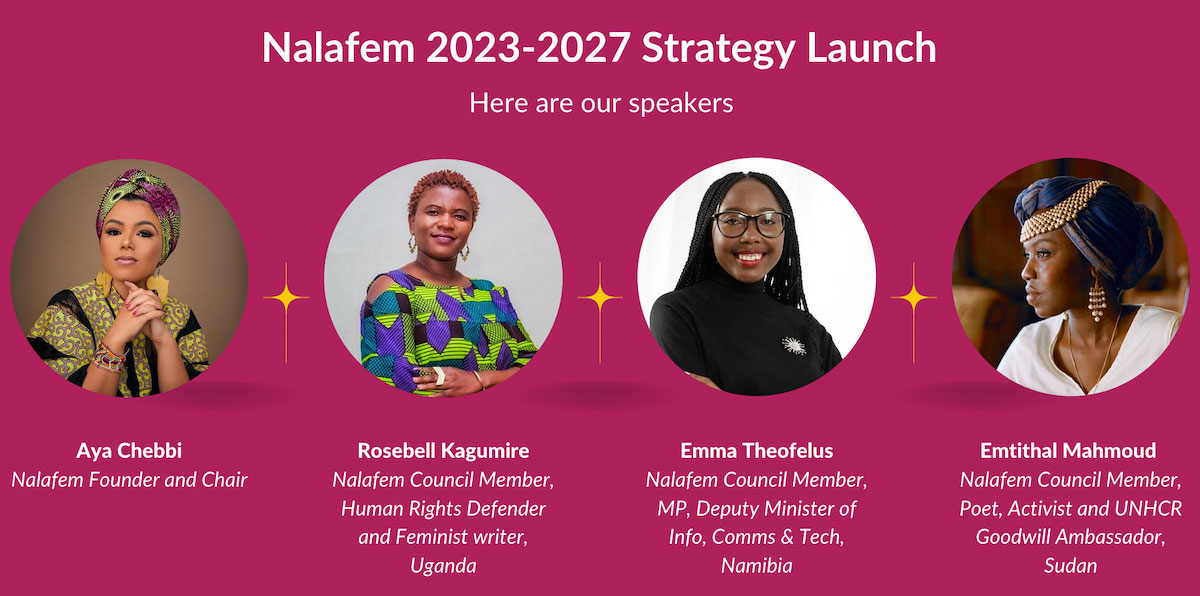
The virtual event was broadcasted live on Nalafem social media and co-created by an outstanding panel of speakers to announce and endorse Nalafem’s strategy and roadmap for the next five years.
Nalafem Founder and Chair, Aya Chebbi shared on her journey of founding Nalafem during the Generation Equality Forum on 1st July 2021. “This is not just a document, it’s about organizing as feminists with three strategic goals: Leading accountability mechanisms, Investing in social economic power of African women and girls and Rising African women and girls into politics ” she said.
Nalafem has the mission to Foster, Embolden and Mobilize (FEM) African women and girls to take charge in the continent. To achieve Nala’s mission, Aya emphasized that coalition work is central to creating the needed systemic change. “Our goal is to grow our collective into a multigenerational alliance,” she said.
The feminist leaders and change makers who contributed to the launch event accentuated Aya’s call for African movement building.
Emma Theophelus, MP, Deputy Minister of Information, Communication and Technology in Namibia and Nalafem Council Member, stated the need to collaborate and advocate for the inclusion of young women in positions of decision making as embraced in Nalafem’s strategic goals. Having African women in leadership positions will naturally contribute to re-writing the stigmatized narratives about the continent. “Women demonstrate political leadership by working across party lines, championing gender equality laws and electoral laws. These issues are supported by the Nalafem strategy,” Emma said.
Watch the full event recording
Our speakers shared their vision on Nalafem’s journey and impact, and their perspectives on the plight of women and girls in Africa.
Pamela Munemo, a Nalafem grant awardee, was grateful to Nalafem for creating a platform for young women in the continent where they can organize and drive their local agendas with a global mindset.
Olufunke Baruwa from Ford Foundation, commended Nalafem for fostering a generation of young feminist movement with a sustainability plan to organize in Africa. “We want to export our organizing and build feminist movements at national and local levels,” she said.
The speakers commended Nalafem for the intergenerational transference of power and ideology that promotes intergenerational co-leadership, one of Africa Young Women B+25 Manifesto demands.
Rosebell Kagumire, Nalafem Council Member, Human Rights Defender and Feminist writer, recalled the journey of the Council members in drafting the strategy in Abuja. She called on women and girls to tell and document their stories as a critical contribution to the feminist written history. Earlier this year Nalafem launched its first book I am Nala: The I AM NALA book is an artistic advocacy tool that amplifies powerful and empowering stories of African women and falls under the Nalafem culture flagship project.
Caroline Ngonze from UNAIDS, highlighted how HIV/AIDS and the COVID-19 pandemic had affected the wellbeing of African women and girls in Africa. In 2021, six out of seven new HIV infections in Africa were girls. The rise of HIV infections is caused by a lack of access to sexual reproductive health programming and information, adding to women and girls already existing vulnerabilities. “We need feminist approaches in tackling these challenges, and Nalafem is leading the way,” she said.
Crystal Ikanih-Musa from Malala Fund echoed Nalafem’s call for ensuring the voices of African women and girls to be heard, “we look forward to helping you implement this strategic plan.”
Purity Kagwiria from Purposeful organization, shared an overview on the impact of her organization’s partnership with Nalafem. This year Purposeful partnered with Nalafem in the Activists’ awards in Nigeria, generation equality forum advocacy and general operations support. She affirmed the organization’s long term commitment to support Nalafem, “initiatives like Nalafem need support, we are listening and are keen to hear how they define their needs so that we can support them to thrive,” she said.
Join us in this journey as collaborators to achieve our vision of realizing the liberation of African women and girls.

Nala Feminist Collective (Nalafem) with support from Malala Fund and Purposeful organization will be sponsoring 8 young African women activists to attend the UN Conference of Parties 27th Session Conference. The conference will be held in Sharm El-Sheikh, Egypt from November 6th to 18th 2022.
During the summit, the activists will amplify women’s and girls’ voices on climate action issues to advocate for climate justice for the African continent.
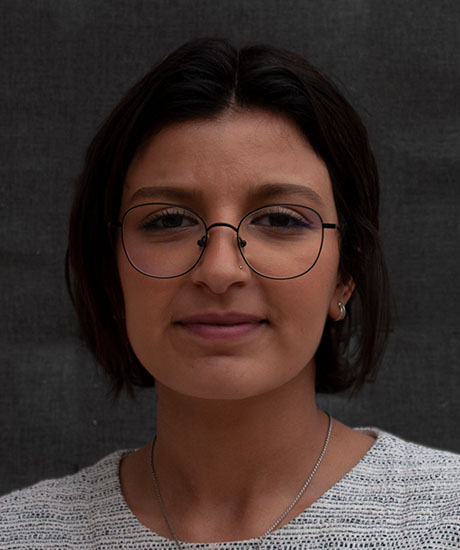
Insaf Abdelmoula, Tunisia
Insaf is a fourth year medical student and climate activist. She recently launched her own youth initiative called Unite the World. Her goal is to develop young leaders by recognizing their potential and supporting them through coaching on how to address community issues and take action. She is also an ambassador for the 1MYAC, an initiative launched by the Swiss Agency for Development and Cooperation.


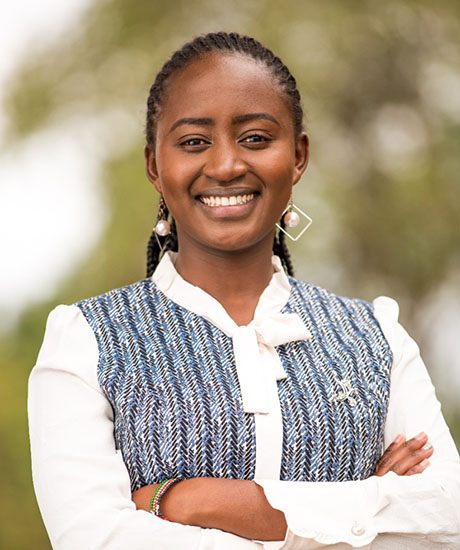
Susan Wavinya Wairimu, Kenya
Susan is a social change activist with a passion on sexual and reproductive health and climate justice issues.
She is the founder of Inspire Teenagers Foundation. She uses her platform to share her story and experience as a teen mom, giving hope to other teen mums.
The goal of her initiative is to end the high rates of teen pregnancies, end period shame in her community and advocate for girls’ education.

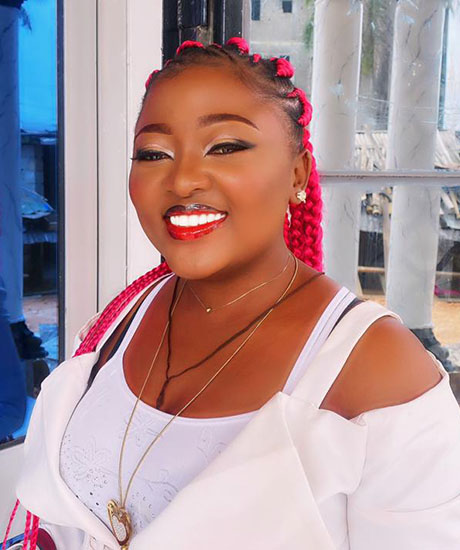
Victorine Nchokuno Ngimou, Cameroon
Victorine is a fierce feminist and girls rights activist, and for the last eight years has fought for girls’ rights, women empowerment and giving voice to the silenced.
She advocates for the advancement of girls education and clean water, sanitation and hygienic environment for girls in and out of school.
In 2014, she created and established a school club called Development Fighters that empowers young girls in Cameroon.
Her activism journey focuses on ending child marriage and aspires to lead an adolescents rights movement.
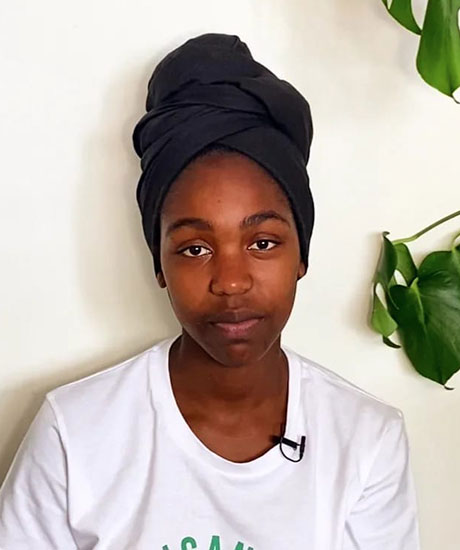
Mitchelle Mufaro Mhaka, Zimbabwe
Mitchelle is a Zimbabwean-born, Cape Town-based Computer Science and Applied Mathematics student, public speaker and activist spreading the word about the climate crisis and related social issues among the youth. She is a Programs Coordinator for the African Climate Alliance, a youth-led grassroots movement-based organization advocating for afrocentric climate justice. Mitchelle strives to climate literacy issues that exist in South Africa and to change the narrative around ideas of sustainability, decolonization and environmentalism that have been pushed by mainstream media.
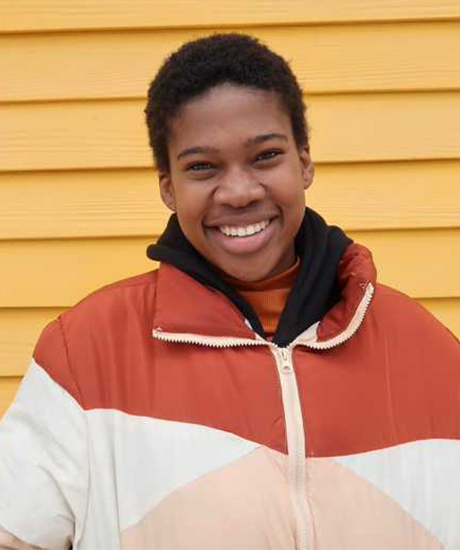
Mthembukazi Zinyanda Layola Bavuma, South Africa
Mthembukazi is an activist and engages communities on the social, economic, and environmental injustices they face. She helps them understand how they can go about capacitating themselves with knowledge and resources that will aid them in climate crises and fight the social ills they face every day. Mthembukazi uses mentorship and education to empower her peers with the aim of collectively tapping into their full potential.
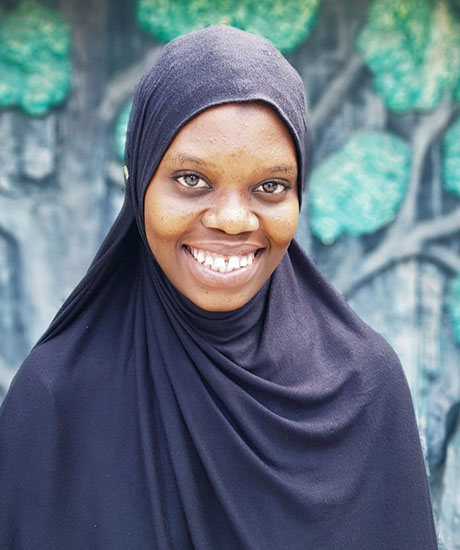
Zuhura Ahmadi Shaweji, Tanzania
Zuhura runs the Tanzania Youth Biodiversity Network Club at Sokoine university of agriculture. She is a volunteer with Environmental Watch Association Tanzania and Earth Day Network Tanzania. She raises environmental awareness in schools, communities and universities around Morogoro Municipality, and participates in planting trees and clean ups in campuses and raising awareness on girls education.
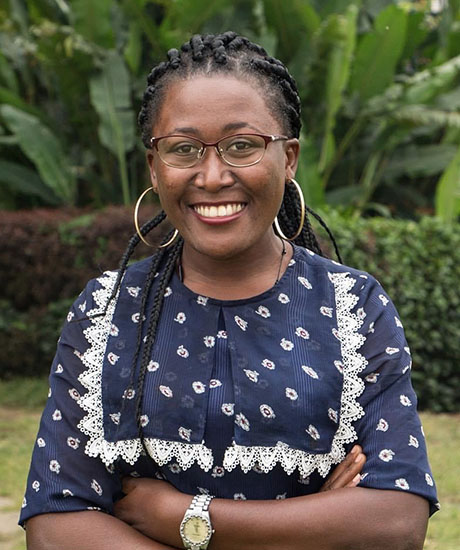
Joanita Babirye, Uganda
Joanita is a Co-founder at Girls For Climate Action, a movement that is putting young women and girls at the forefront of climate action. She also trains young women green preneurs in marginalized communities to start local green innovations. She serves as the UN Women youth Action Coalition leader under Generation Equality on Feminist Action For Climate Justice. She is an ardent advocate for the engagement of youths in policy formulation, strengthening and implementation. Joanita is an ardent climate justice advocate and currently pursuing her Master in environment and Natural Resources. In 2021, she was named as one of the most influential young Africans in civil society, climate action and leadership.
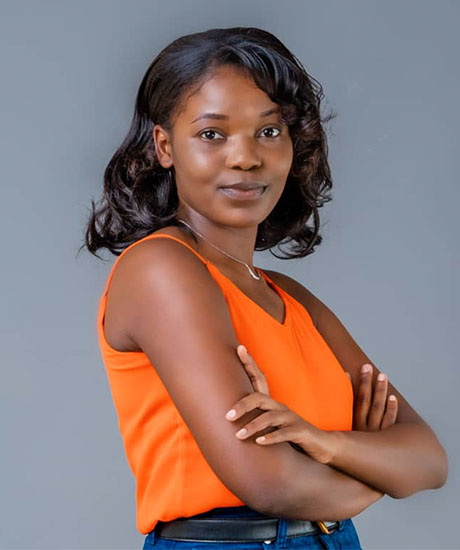
Esther Gabriella Kaunda, Malawi
Esther is a youth activist and the marketing and communications director of Green Girls Platform, a female-led initiative that works to address the violence that girls and women face due to Climate Change in Malawi. Esther was part of the PACE youth multimedia fellowship 2021 cohort. She enjoys voluntary work and working with the youth especially girls and young women to ensure that their rights in relation to climate change are fully realized. This is what inspired her zeal to be part of the platform for girls and young women in combating Climate Change in Malawi. Esther has also attended high level meetings like the National Climate Change adaptation conference, and was also part of the steering committee of the first ever local conference of youth in Malawi.

Aya Chebbi is a multi award-winning Pan-African feminist. She served as the first ever African Union Special Envoy on Youth and the youngest diplomat at the African Union Commission Chairperson’s Cabinet.
Over the span of the past decade, she has single-handedly transformed the youth participation space across Africa and created various online and offline platforms with a holistic focus on youth and women leadership.
She is Founder and Chair of the Nala Feminist Collective, a pan-African group of 17 powerful young women, and CEO of Afresist, a think tank documenting youth work in Africa. She received the 2019 Gates Foundation Campaign Award and was named in Forbes’ Africa’s 50 Most Powerful Women.
GPI asked her about the challenges of young people and young women in particular and what she expects from world leaders in light of the Generation Equality Forum.
Jobs and food security are top priorities of young people in Africa. For young women in particular, and due to the Covid-Pandemic, the closure of informal markets and restricted mobility increased young women’s socio-economic vulnerability. Young people are often left out of the conversation when it comes to inclusion in economic models post-crises. What is of importance is inclusion at all levels of decision making.
Economic justice coupled with intergenerational co-leadership can ensure enabling environments. The first one is a call for equal pay and equal remuneration under equal conditions, while the latter is against tokenization of youth—a seat at the table of decision making with equal rights of participation in policy making for reform to happen.
26 years ago since the Beijing declaration, there has been some progress undeniably but the demands of African young women are still not met. As young women, we are still fighting for our rights— which our grandmothers before us have fought for, such as calling for the end of female genital mutilations, or gender inequality in women’s political participation and involvement in decision-making processes.
The Nala Feminist Collective which I chair brings together 17 powerful African feminists who are advocating for the implementation for the Africa Young Women Beijing+25 Manifesto, which is a political feminist document that presents 10 demands: Economic Justice, the Criminalisation of Gender-Based Violence, Digital Justice, Ending Gender Discrimination, Access to Justice & Protection Demand, Sexual and Reproductive Health Rights, Mental Health & Wellbeing, Inclusive and Equitable Education, Silencing The Guns and Intergenerational Co-Leadership.
The challenges which young women face on the continent are intersectional and the demands of the Manifesto tackle these. We cannot wait for another 108 years before reaching gender equality on the African continent. The policies and outcomes from Generation Equality cannot move forward without Africa. As young African women, we demand and not recommend. It is high time to take action; we cannot wait and our voices cannot be put at the margin of decision-making.
Generation Equality leaders must listen and must act now. They need to move from promises to progress, walk the talk. We no longer want youth to be invited to closing ceremonies but to be co-creators of the policies that shape their lives. Generation Equality leaders need to translate their claims and speeches about demographic dividend and gender equality into political will. Generation Equality cannot afford to move forward without Africa.
On occasion of the GEF the Nala Collective calls for support of the The Africa Young Women Beijing+25 Manifesto which presents the collective hopes and aspirations of young women in Africa. Lend your voice to thousands of young African women and sign the manifesto here.
SOURCE: https://globalperspectives.org/en/blog/2021/06/29/aya-chebbi-we-no-longer-want-youth-to-be-invited-to-closing-ceremonies-but-to-be-co-creators-of-the-policies-that-shape-their-lives/

Aya Chebbi is a multi award-winning Pan-African feminist. She rose to prominence as a voice for democracy and shot to global fame as a political blogger during 2010-11 Tunisia’s Revolution. She received the 2019 Gates Foundation Campaign Award and was named in Forbes’ Africa’s 50 Most Powerful Women and New African Magazine List of 100 Most Influential Africans. Her story and talks have been critically acclaimed by the Guardian, Huffpost, Jeune Afrique, France24, Deutsche Welle and more.
I am a product of public education in Tunisia; I studied my primary, secondary, and college in Tunisia. I graduated with a Bachelor’s degree in International Relations from university in Tunisia and later went on to do a Master’s degree in 2015 in African politics from the School of Oriental and African Studies (SOAS).
I am an only child to a very conservative family—especially my mother and her family—but both my parents’ families are very conservative. But my father, spent 40 years in the Tunisian Army, is very supportive. I’ve been moving from one city to another in Tunisia with him. I’ve been to lots of different cities in Tunisia and I’ve lived in about eight different cities and studied in different schools because of his work. Being a nomad, being able to integrate in different cultures and diversity of our country from north to south to east to west also contributed to who I am today. I am very blessed to have grown like that, to be able to meet different people from different parts of Tunisia and understand my country’s diversity which helped me to respect diversity as I grew up.
The revolution in Tunisia was a youth-led movement that toppled Ben Ali. Young people were at the frontlines of the struggle, mobilizing and protesting. They faced police brutality and sacrificed their lives in many cities across Tunisia. Our movement emerged through decentralized grassroots participation, challenging the notion of a “ youth movement” that is homogenous. Instead, we represented many different interests and goals. While some of us have chosen to participate in traditional politics, others have found other ways to meaningfully construct the country’s future.
Our demands were: freedom, social justice and jobs with dignity. It has always been a revolution of dignity, for economic justice. Young women like myself have taken to the streets, unafraid to die for freedom. When I reflect on the past nine years, I recognise the boldness of my generation which shaped its own destiny and that of future generations. The efforts and sacrifices of young women left our mark upon dignity and equality, which ought not to go unrecognised. Our experiences have not gone unnoticed, and we continue to be on the front lines.
With 65% of Africa’s population being under the age of 30, I represented not only the most youthful population in the world, but the most innovative, best educated and the coolest generation. As a generation of change-makers, we want to see and shape a new model of leadership in Africa. The issues faced by the African youth are very complex as most youth are marginalised, unemployed and insecure of the political landscapes which they occupy.
In Africa, we ended up with a generation in waithood – waiting for adulthood, unable to achieve its financial freedom because of inequality. Especially when we show the intersections of class, gender, race, and other relations of power. Africa hosts the largest refugee and migrant populations. Look at the digital divide, 75% of Africa is offline. Yet, Africa has enough valuable natural resources to empower everybody, including women and the youth, if resources are distributed in an equitable way. But youths are dying in the Mediterranean and recruited to violent extremism as an alternative.
Intergenerational co-leadership has been at the core of my advocacy during my mandate as African Union Youth Envoy because there is still an urgent need to center youth voices in shaping the policies that affect their lives. We cannot keep inheriting systems which we didn’t co-create, we are agents of change, and need to be given seats at the table, and to actively shape our realities, without discrimination or tokenism.
The root cause of many conflicts is illiteracy, marginalization and lack of equal opportunities. To address security, leaders need to deal with the soul issues. Militarization is only a response. It doesn’t deal with prevention or transformation.
Many youth’s lives have been disrupted due to wars, and conflicts. Young women, in particular have been the most affected. Young men and women have always been part of peacebuilding processes, however their contributions have been erased and pushed from the mainstream historical narratives. In fact, with the Africa Young Women Beijing+25 Manifesto, a political and feminist document co-created with 1500 young women and men from 44 African countries, we, as young women, demand the institutionalization of our participation in peacebuilding efforts with documenting these contributions. We cannot afford to move ahead without accentuating on the work that has been done on the ground.
Youth inclusion in peacebuilding can also ensure that funds are allocated to the appropriate youth-led and grassroot bodies. Young women peacebuilders and organisations and specific young women programmes lead with intersectional approaches, bridging between youth, Peace and Security and Women peace and Security agendas. We all want an Africa that is Conflict-Free.
I have been delighted to recently launch at the Generation Equality Forum the Nala Feminist Collective, which is a Pan-African group of 17 feminists with a mission to foster, enable and mobilize young women from Africa and Diaspora. The Nala council which drives the advocacy of the manifesto is made up of powerful women such as Environmental activist Vanessa Nakate, Economist & Former Minister Ms. Bogolo J. Kenewendo, UNHCR ambassador, Emtithal Mahmoud, Miss Universe 2019, Zozibini Tunzi, among others women leaders. Our demands as African Young women are as follows: Economic Justice Demand, Criminalization of Gender-Based Violence, Ending Gender Discrimination, Access to Justice and Protection, Sexual Health and Reproductive Rights, Mental Health and Wellbeing, Inclusive and Equitable Education, Digital justice, Silencing the Guns and Intergenerational Co-leadership. These intersecting demands which Africa’s young women are asking for have been exacerbated by the COVID-19 pandemic. In fact, none of these issues stands alone.
Our presence at the Generation Equality Forum last week was an emphasis that gender equality cannot be achieved without Africa, and without Africa’s young women. We are calling for change and emerging as a united voice. Eventually, 8 out of 10 of these demands were incorporated into Action Coalitions’ commitments. We believe that funds must be channeled to the grassroots in order for gender equality to be achieved.
Generation Equality Forum to drive major policy reforms and generate over USD 40 billion in new investments
Paris, 30 June 2021 — Heads of State and Government, heads of international organizations, activists from civil society and youth-led organizations, philanthropists and CEOs of private sector companies gathered today for the opening of the Generation Equality Forum held from 30 June to 2 July in Paris. The Forum launched a Global Acceleration Plan for Gender Equality, driven by six Action Coalitions, and launched a Compact on Women, Peace and Security and Humanitarian Action, with the aim to accelerate gender equality in the next five years and to face the growing risks to women’s rights caused by Covid-19. The Forum’s projected USD 40 billion of new investments will represent the largest-ever collective infusion of resources into global gender equality.
The event marks the most significant international convening for gender equality since the 1995 Women’s Conference in Beijing. The Forum was opened by the co-hosts, President of France, Emmanuel Macron and Mexico’s President, Andrés Manuel López Obrador, as well as by UN Secretary-General António Guterres and convener of the Forum, Phumzile Mlambo-Ngcuka, Executive Director of UN Women. Notable speakers at the opening event also included Vice President of the United States, Kamala Harris, President of Kenya, Uhuru Kenyatta, Nobel laureate Nadia Murad, European Commission President Ursula von der Leyen, and Tunisian feminist Aya Chebbi. The ceremony was centred on the voice of civil society activists and women’s rights defenders and featured long-term advocate for gender equality and Former Secretary of State Hillary Clinton in an intergenerational dialogue with climate activist Julieta Martinez.
The Forum showcases concrete commitments and has a sharp focus on implementation and financing for gender equality. During the opening event, major commitments were announced by the Heads of State and Government of France, the United States of America, Kenya, Argentina, Georgia, Finland, Canada, Germany, South Africa, the European Union and from international organizations and private sector. The commitments included:
USD 40 billion+ in new investments benefitting women and girls, with government commitments over the three days expected to total USD 17 billion. At the Opening Ceremony, a USD 2.1 billion commitment from the Bill & Melinda Gates Foundation to advance women’s leadership, reproductive health, and economic empowerment was announced, alongside a USD 420 million investment from the Ford Foundation to tackle threats to women’s rights caused by COVID-19. The World Bank committed to a major investment for programmes in 12 African States to tackle gender inequalities.
The implementation of major policy reforms and programmes to advance gender equality. The President of Kenya announced a national strategy and resources to prevent and respond to gender-based violence. The Prime Minister of Canada presented the country’s commitment to invest in a care system to benefit women and girls and the President of Georgia presented her commitment to lead legislative change on the legal definition of rape. The Vice President of the United States made policy and resource commitments on gender-based violence, women’s economic security, and sexual and reproductive health and rights.
The launch of new coordination mechanisms to advance key issues for gender equality, such as a new Global Alliance on Care and an Alliance to Fund Sustainable Feminist Movements.
President Macron, speaking live from Paris underscored his commitment to confronting the gender equality crisis, saying, “Through the Generation Equality Forum, France’s objective is to state loud and clear that the rights of women and girls are universal, as are all human rights, everywhere, all the time. This model that France defends is not a negation of our differences. It is about reaffirming that no cultural or religious relativism, no regional or identity-based particularism, justifies that a woman cannot enjoy the same rights and the same opportunities as a man. Our method for achieving this result is concerted international action, what I have called multilateralism through action.” The French government committed USD 100 million to improve access to contraceptives and family planning.
UN Secretary-General António Guterres, speaking live in Paris, welcomed the bold ambition of the Forum, saying that the Forum was a moment “to redress a global imbalance, with activists, policymakers, and leaders across all ages shaping our world into a more just and gender-equal society.”
Also speaking live in Paris, Ms. Mlambo-Ngcuka, Executive Director of UN Women, noted: “This is a new chapter for gender equality. Those with a world view of radical impatience are converging to create big, well-resourced changes. Together we will revitalize the unfinished Beijing agenda, united by the conviction that we must take risks and do things differently.”
Over the following two days of the Forum, more financial, policy and programme commitments are expected from over 1,000 diverse commitment-makers. Additional philanthropy commitments are expected from the Co-Impact Fund, CIFF, Fondation Chanel, Global Green Grants, the Women’s Funding Network, and the Open Societies Foundation. Major private sector contributors will include P&G, Unilever, PayPal and Estée Lauder. A significant number of civil society and youth led commitments will be made; for example: GirlsForClimate will commit to establish over 100 local climate hubs in Uganda; Cameroon Digital Rights Campaign will announce advocacy and policy work to end the digital divide; and the Egyptian Feminist Union will commit to work on equal rights to divorce and guardianship of children for divorced women. Additional Member States announcing commitments will include Armenia, Burkina Faso, Chile, Costa Rica, Denmark, Germany Iceland, Finland, North Macedonia, Malawi, the Maldives, the Kingdom of the Netherlands, Mexico, Rwanda, Spain, Sweden, Tunisia, the United Kingdom and Uruguay.
The Forum includes over 110 events designed to propel action on gender equality, including a youth-led stage. Sessions aligned with the Action Coalitions – the six most catalytic actions required to accelerate gender equality, including economic justice, gender-based violence, sexual and reproductive health and rights, impact of the climate emergency on women and girls, need for digital and technology inclusion, and support to feminist movements and leadership – are also a key component of the event agenda, as is the Compact on Women, Peace and Security and Humanitarian Action.
The Paris Forum is expected to draw over 40,000 virtual participants. Confirmed speakers across the three-day virtual event include President of Rwanda Paul Kagame, Co-Chair of the Bill & Melinda Gates Foundation, Melinda French Gates, Brazilian Rapper MC Soffia and Actor and UN Women Goodwill Ambassador Anne Hathaway.
The Forum in Paris marks the launch of a five-year journey designed to accelerate gender equality and a turning point in the international community’s commitment towards women’s rights.
SOURCE: https://reliefweb.int/report/world/heads-state-leaders-and-activists-take-bold-action-accelerate-gender-equality-and

The Generation Equality Forum, a series of global gatherings to celebrate the progress achieved in gender equality, is currently ongoing in Paris. Meanwhile, a new online tool aims to bridge the gap between people and governments on ambitious gender equality action by 2030. The tool helps to forecast progress on gender equality or the lack thereof, across five issues and 129 countries. Rachel Kagoiya, Manager: Women leadership Programme at FEMNET and Aya Chebbi an African Union Youth envoy join CNBC Africa to discuss the progress of gender equality in Africa.
SOURCE: https://www.cnbcafrica.com/2021/this-new-online-tool-aims-to-bridge-the-gender-gap-between-people-and-governments/

“We need to do something differently this time. We need to use this historic moment to do something differently. And my generation is calling for a new approach to leadership, intergenerational co-leadership because we cannot inherit systems we didn’t co-design…“
—Aya Chebbi, first-ever African Union special envoy on youth and youngest diplomat
Over the course of almost four hours, heads of state, leaders of international organizations, philanthropists, civil society and the newest generation of activists were introduced as co-visionaries of the Generation Equality Forum.
Throughout the opening ceremony, country leaders, directors of international institutions and donors declared their political and financial commitments to gender equality:
With stakeholders as influential as world leaders and billionaire philanthropists, is giving young people the microphone more than just symbolic at best, and a ploy of tokenism at worst? How can we hold international institutions accountable for their commitment to the inclusion of young people and civil society as co-leaders of Generation Equality?
With the goal of pushing forward commitments made 26 years ago at the Fourth World Conference on Women, and “building back better” post COVID-19, U.N. Women’s Generation Equality Forum was co-chaired by the governments of Mexico and France—the former and that of President Andrés Manuel López Obrador whose government has supported a lackluster response to gender-based violence, failing victims and advocates with his utter disregard for and discreditation of their fight; and the latter, that of Emmanuel Macron, whose government has validated discriminatory rhetoric and advocated femonationalist policy.
AMLO’s speech televised at the forum consisted of detracting the focus from gender, not including the word even when speaking of the “forum on equality,” and mentioning gender only briefly to state, “of course men and women are equal, and we must continue combatting machismo,” before moving the attention to economic and social equality for the remainder of his speech; his campaign promise to end corruption, and attention directed toward the class divide has left the cause of gender equality to suffer.
Macron’s remarks at the opening ceremony defended France’s model: “It is about reaffirming that no cultural or religious relativism, no regional or identity-based particularism, justifies that a woman cannot enjoy the same rights and the same opportunities as a man.”
The presidents fail to recognize the indispensable recognition of the intersection between class and gender; race and gender; ethnicity and gender; country of origin and gender; and so on. How can young women be assured they will be sufficiently supported by the international community whilst those denying their individual identities and collective plights are designated as leaders of gender equality and given the platform to expand their narrative? How can young women trust they will be acknowledged as capable of identifying their own needs and thus, the areas in which resource allocation would be most beneficial to them?
The point of this forum is “to do things differently,” according to executive director of U.N. Women, Phmuzile Mlambo-Ngcuka.
The first point of divergence between 2021’s Generation Equality and the 1995 Fourth World Conference on Women is the emphasis of Generation Equality as a multi-stakeholder and intergenerational effort, with the involvement of civil society organizations, the private sector, philanthropies and youth-led organizations in addition to member states, United Nations agencies and international organizations.
The second is the requiring of all participants to submit measurable financial and political commitments in at least one of the key Action Coalition areas, identifying progress using the established accountability framework over the next five years.
Sharing the stage with Melinda Gates, co-chair of the Bill & Melinda Gates Foundation; Mari Pangestu, managing director of the World Bank; and the youngest prime minister in the world, Sanna Marin of Finland (34); the youngest by a year and the only civil society representative onstage, Aya Chebbi (33), founder of pan-African feminist collective NALA fearlessly voiced what young people and civil society expect out of Generation Equality.
“Jobs. Freedom. Dignity. It has always been a revolution for economic justice led by women and young people.”
Speaking of the “revolution of dignity,” known in the West as the Arab Spring, she underscored the role young women played in the 2011 movement, connecting it with the international feminist movement, a movement that should also be a movement for economic justice and dignity.
She continued by denouncing the dominant narrative of Western countries, highly influential in intergovernmental and international initiatives, like those of the U.N. and its agencies, in limiting the equal opportunities available to young women of the African diaspora, and seamlessly alludes to global vaccine inequities and the exclusion of women from low-income countries from world conferences, including Generation Equality.
“Sexist, discriminatory, Islamophobic laws today ban young women from wearing hijab in some countries and enforce hijab in other countries. … Young women in Africa do not have access to vaccines and cannot afford $80 COVID tests and 150 Euro visa fees and many of them are not here because of that. So how are we gonna change that? What action are we gonna take today? This is intersectional. It cannot be fixed by creating jobs and teaching girls how to code.”
Addressing the gender gap in STEM in low-income countries has long been a band-aid solution to global inequities caused by a neocolonial system. What is the solution to this temporary fix that has failed us for so long? A new approach to leadership to rectify international priorities.
Echoing Phmuzile Mlambo-Ngcuka, Chebbi declared, “We need to do something differently this time. We need to use this historic moment to do something differently. And my generation is calling for a new approach to leadership, intergenerational co-leadership because we cannot inherit systems we didn’t co-design… we have the demographic power, the voting power, the innovation power, the youth-led accountability power. I don’t as a millennial want to build back better [the economy]. I want to build forward with equity and feminist economics.”
“We need to change the system because the current system does not work for us,” she continued. “The current racist, patriarchal, neocolonial system does not work for us, does not provide equal pay for equal work.”
At the base of the revindications of grassroots activists in low-income countries historically left behind? Equitable and transparent funding.
“40 billion [dollars] is an amazing commitment but that funding should go directly to women and girls most vulnerable, should go directly to organizations in the grassroots. … Why is it that when there is [a] terrorist attack[s] in the Sahel region countries go to fund militarization but do not fund with the same urgency 20 million girls in the Sahel right now under the age of 18 who have no economic opportunities. So, there is money. There is enough. Where is it spent. How is it spent. That is what we need to do differently moving forward.”
Though the only panelist to be twice interrupted during her five-minute discourse by Elisabeth Moreno—French minister for gender equality, diversity and equal opportunities and moderator of the panel—Chebbi rightfully claimed her time.
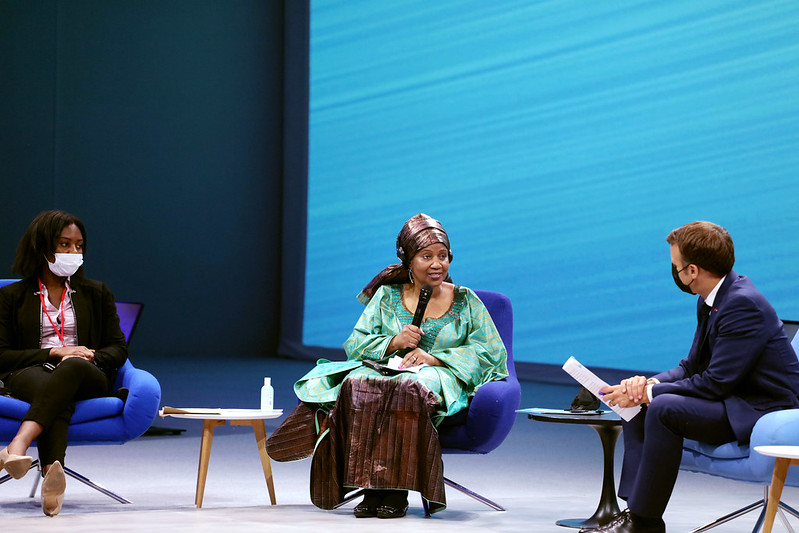
Left to right: Shantel Marekera, member of the Generation Equality Youth Task Force; U.N. Women executive director Phumzile Mlambo-Ngcuka; and French President Emmanuel Macron on on June 30. (U.N. Women / Fabrice Gentile)
By the end of the forum, governments and public sector institutions combined had committed to invest $21 billion, the private sector $13 billion, and philanthropy $4.5 billion. U.N. entities, international and regional organizations $1.3 billion.
At the closing ceremony, during her last remarks of the Generation Equality Forum, U.N. Women executive director Phumzile Mlambo-Ngcuka said, “During the last few days a few people have called me aside wanting to know what’s going to happen to these resources… the resources that have been put forward by the many commitment makers that were here today will go to grassroots organizations in communities. They will go to Member States, who need to implement programs that will address women and girls that are facing trouble. They will also go to the U.N. agencies that have programs that must be scaled up and taken to a much larger scale.”
And lastly, speaking about young people, “They will look much further than we can look, and they are a new generation. What was born in Beijing, these young people are going to take forward for us, who are older now. This is the new birth of a new generation and new leadership for women…”
In order to truly build back better after the global pandemic, we must build forward. Our approach must be intersectional, recognizing all identities and all communities and addressing all inequalities as a necessary precursor to policymaking. The UN and its agencies must prioritize funding grassroots organizations, acknowledging those most affected will benefit most through direct funding. Young feminists must be incorporated into decision-making, and accountability frameworks must be co-created and overseen by those in the grassroots and young people.
With notable accountability mechanism modifications these next five years, we can expect governments to get closer to reaching their political commitments; what is left to be seen is whether the international community will have adequately supported all communities of women and girls, equitably distributed resources to the appropriate organizations, and met young people’s demands of inclusion in collaborative leadership.
*Aya Chebbi, first-ever African Union special envoy on youth and youngest diplomat, founded the pan-African feminist collective NALA, a Pan-African group of 17 feminists under the age of 40 with a mission to foster, enable and mobilize young women from Africa and Diaspora, while bridging the gap between policy and implementation, intergovernmental and grassroots as well as generational spaces. As an attempt to bring closer African Young Women to the global phora offered by the GEF Chebbi convened Africa Young Women Beijing+25 Regional Barazas and Global Intergenerational Dialogue, which led to the creation of the Africa Young Women Beijing+25 Manifesto.
*Other youth groups who were heavily involved in the conception of the forum include the Youth Task Force whose 40 members collaborated in the nine months leading up to the forum in the creation of the Young Feminist Manifesto.
SOURCE: https://msmagazine.com/2021/07/18/generation-equality-equal-leadership-equitable-funding/

Aya Chebbi is at the forefront of mapping out a new future for women in Africa.
At 33 years old, the Tunisian diplomat is the first ever African Union (AU) youth envoy (she was appointed in 2018), has a degree in International Relations and was the youngest appointee at the AU during her two-year term.
No country in the world is on track to achieve the United Nations’ global goal for gender parity, and women in Africa are disproportionately affected by harmful cultural practices like FGM, poverty, economic inequality, misogynistic laws, and political exclusion.
To fight these challenges and create a more inclusive future for African women, Chebbi has launched the Nala Feminist Collective, a pan-African group of 17 young feminists with a mission to mobilize young women from Africa and the diaspora to take action against issues affecting women across the continent.
The group has a major focus on the Africa Young Women B+25 Manifesto, which includes demands for the criminalization of gender-based violence (GBV), sexual and reproductive health rights for African women, inclusive education and more.
Global Citizen spoke with Chebbi to learn more about the Nala Feminist Collective, the role of women in Africa and how the organisation plans to empower African women:
Chebbi: Since I found power in my voice, it’s been a journey of challenging the status quo, and delivering for the most vulnerable.
I have been a rebel in my family and my village, standing up for myself as a young girl who was abused and felt powerless. During the revolution in my country Tunisia, the rebel in me turned activist, matured into a political voice.
I was angry, and fearless and through my activism I moved from fighting against, to fighting for. I started focusing on what I was good at — blogging, mobilizing, organizing, galvanizing the collective power of young people.
And so, the young people I work with everyday inspire my activism. I wake up every morning and I know that the hustle is worth it because our generation deserves better.
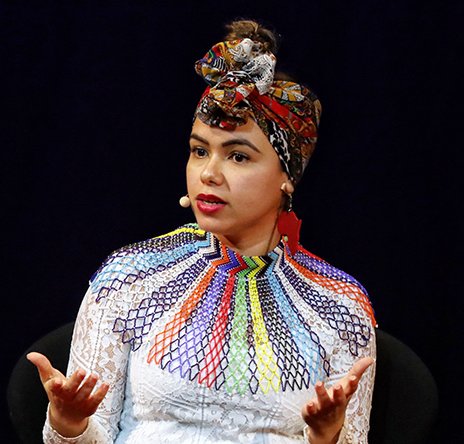
With over a decade of activism and diplomacy, I have met inspiring young women who are breaking barriers, paving the way as the first and the youngest to innovate, to hold leadership positions, to show that young women deserve equal opportunities, and can be whatever they want to be.
Aya Chebbi, Founder of the Nala Feminist Collective. Credit: Nala Feminist Collective
I thought: “What would happen if we get all these bold young African women together in one platform? How loud can our voice get? How fast can the gender agenda move on the African continent? How much narrative and discourse can we change? And how far can we push political will? If only we come together.”
I’m proud for this vision to manifest concretely and to have launched NalaFem at the Generation Equality forum in Paris. We are a pan-African and women-led collective of 17 feminists who form the Nala Council.
We are ministers, parliamentarians, entrepreneurs, writers, artists, activists, diplomats, farmers and everything in between.
Nala is the lioness, the queen. In Kiswahili (a language spoken primarily in East Africa), Nala [means] “the gift” and has many other powerful meanings in many cultures that these 17 feminists embody every day when they serve and lead.
Nala’s goals are [the acronym] FEM:
FOSTER intergenerational co-leadership to bridge the generational gap with greater inclusion of young women in decision making;
ENABLE young women [to gain skills] and expertise to bridge policy and implementation gaps and; and
MOBILIZE for youth-led accountability on the manifesto’s 10 demands to bridge intergovernmental and grassroots spaces.
Nala is guided by the Africa Young Women Beijing+25 Manifesto targeting the political, digital and offline spaces.
The manifesto was developed last year in October 2020, during my mandate as the African Union Envoy on Youth, during five regional consultations, which we called barazas, with over 1,500 young people from 44 African countries and 30 partners.
This bottom-up process resulted in a groundbreaking feminist political document that sets out critical issues of concern for young women in Africa and make demands for addressing them.
Over the past two months we have collected over 10,000 signatures on the manifesto, both online and offline. [It] shows that this manifesto is owned by a broad spectrum of young people who are empowered to use their voices to bring more youth into this movement.
We plan to achieve Nala’s objectives through political engagement, advocacy and campaigning and we already see the results of our work which pushed for 8 of 10 demands [in our manifesto] to be included in the Action Coalitions blueprint and in the Women, Peace and Security and Humanitarian Action Compact at the Generation Equality Forum (GEF).
The 10 demands of the manifesto are economic justice, criminalization of gender-based violence, end gender discrimination, access to justice and protection, sexual and reproductive health and rights, mental health and well-being, Inclusive, equitable and quality education, digital justice, silencing the guns and intergenerational co-leadership.
People usually think when women come together, it is to tackle so-called “women’s issues” but this manifesto shows really that it’s about Africa’s challenges with young women’s concerns as part of the solution.
In fact, young men were part of the mobilization for the manifesto and 47.8% of signatures were by men.
I have met and seen these inspiring women’s impact first hand in their communities and countries.
Each one of them holds a large following and influence in their spheres across civil society, philanthropy, public administration, private sector, entertainment, multilateral institutions and more.
This is to ensure that we can bridge gaps and bring more young women to the spaces we influence through our collective voice and action.
When I was a girl, I felt like I had to fight to just exist, to be, to become an equal human being.
But how [much] more trauma do we have to bear? How are we supposed to thrive when all we remember growing up is that we are social property, second-class citizens, that we are either invisible, exotic, victims or pitiful objects and that we should follow social norms that have control over our sexuality, economic power and political being.
This is not just about women’s empowerment, it’s about women’s liberation, freedom and livelihoods.
So of course, millions of us women take to the streets unafraid to die for freedom. If we want to run through the stats, most countries in the world limit economic opportunities for women by law.
One out of three women do not have a bank account. There are more child brides in the world than people living in the whole European Union, and the list goes on.
But if we look at the possibilities, equal access to education would generate more than $112 billion worth of tax revenues for developing countries. If women were given the same land rights as men, the harvest yields could lift up to 150 million people out of chronic hunger.
So why is it important? Gender equality everyone benefits!
Today we need to ask ourselves, what is the collective priority for humanity right now? Not just for your country, or your political or financial institution, or even your non-profit organisation, your classroom, or your digital app.
Once you acknowledge it, you can call out misogyny, blog and amplify the lived experiences of inequality, change discriminatory laws, enforce progressive policies, fund women initiatives, pay a girl’s school fees, provide equal pay for your staff, look around the table of your daily meetings and make sure young women are heard, treat women in your life right.
Just be a feminist every single day, just like women try to resist every single day.
I belong to a mass movement of young women [who are] unapologetic disruptors for our legitimate rights.
We take to the streets when no one listens because we have agency. At this point in time, we all have the historic responsibility here and now to make things right for the next five years, to make the right political choices that are fully funded, accountable and informed by the women working on these issues, day in and day out.
I learnt from my activism that the only way to end injustice is to act. This is the time to act on gender agenda and stand in solidarity.
SOURCE: https://www.globalcitizen.org/en/content/aya-chebbi-pan-african-feminist/
