

By Benite Cishugi, Democratic Republic of Congo
In relation to the recent UN report revealing a 25% increase in conflict-related sexual violence, it is alarming. Behind these figures are thousands of shattered lives – women, girls, and sometimes men silenced in contexts where human dignity should be safeguarded above all.
It is crucial to remember that sexual violence in conflict is not “collateral damage” but a grave crime that demands justice and redress. As young people and thought leaders, we have the responsibility to keep this issue in the public space, to advocate for the protection of survivors, and to demand accountability from perpetrators.
True peace cannot be built as long as the bodies of women and girls remain battlefields.
Dear leaders, let us stand up to denounce all this.
2025 I AM NALA Fellow
Reference: https://www.un.org/sexualviolenceinconflict/

Zainab Abdulfattah
Gender advocates in Nigeria are celebrating progress on the Reserved Seats for Women Bill. With the bill set for its third reading in October 2025, there’s growing optimism and urgency. If passed, it will move to State Assemblies before heading to the President for assent. Supporters say a 1% budget bump is a small price for the long-term return of inclusive governance.
The Numbers Are Telling: In the current National Assembly, there are only 4 women in the 109-member Senate (about 3.7 – 4%) . And out of the 360 members in the House of Representatives, women occupy just 17 seats(4.7%) . Combined, that’s 21 women out of 469 national lawmakers, less than 5% representation .
At the state level, 15 of the 36 State Houses of Assemblies in Nigeria have no women representation at all .
This is why the Reserved Seats for Women’s bill is a bold step toward equity. The bill calls for the creation of additional seats; 37 Senate seats, 37 House seats, and 3 per state assembly, all reserved for women.
A Stronger Democracy Isn’t Threatened, It is Forged. Democracy thrives when everyone has a seat at the table. Right now, women who form nearly half our population remain sidelined. This isn’t representation. It’s exclusion.
Countries with gender quotas have seen positive shifts. Countries like Rwanda, Senegal, South Africa, and Namibia have shown that gender quotas work, delivering higher representation, stronger policies, and more inclusive governance. Rwanda leads the world with over 60% women in parliament, while Senegal has doubled women’s seats since adopting quotas. Nigeria, as Africa’s largest democracy and economy, cannot remain at the bottom of the table. We must lead by example, not trail behind.
Nigeria cannot afford to lag.
Sources
https://thenationonlineng.net/women-occupying-only-64-of

By Wanja Maina
In June 2024, I found myself on the streets of Kenya, part of the Gen Z youth movement protesting a Finance Bill that sought to burden common goods with new taxes and drastically cut budgets for crucial social sectors, including support for disabled people.
The echoes of these protests, globally reported, resonated with similar demonstrations in 2023 against the soaring cost of Unga (maize flour) – a staple that serves as a barometer of our nation’s food security. In both instances, the names of the IMF and World Bank frequently emerged on placards, with one protester’s sign in 2024 boldly declaring, “IMF, World Bank, Stop the Modern Day Slavery.”
When the invitation arrived to represent Nalafem at the African #Femonomics Collective planning session in Mauritius, I was overwhelmed. The weight of representing young African women at such a high-level meeting brought with it a wave of imposter syndrome. “Will I be able to do enough in 5 days? Who will I be meeting? And how do all these international discussions connect to local realities?” I asked myself.
I’ve always been a critic of boardroom meetings, often perceiving them as theoretical and disconnected from the “ground.” Yet, here I was, headed to a boardroom to discuss and plan the future of economics with an African and feminist lens.
The concept note was dense with technical terms – epistemology, Eurocentric hypotheses, cis-heteropatriarchy, multi-level economic governance structure, financial architecture, alternative economic frameworks – terms that ChatGPT became my essential guide to understanding, and then translating into what they meant for a local African woman in my village.
Upon my arrival in Mauritius, I was struck by the island’s beautiful roads, vast sugarcane plantations, and its impressive welfare system. Public health, education, and transport for the retired and disabled are all provided free of charge, a stark contrast to some of the struggles we face back home.
As expected in a gathering of African feminists, the room was a vibrant tapestry of African print dresses, each one a testament to the diverse ideas, opinions, and perspectives that were about to converge. And as young African women shared stories of bloated administrative budgets for political elites and severe cuts to social sectors in their respective countries, my mind kept returning to Kenya’s 2025/26 Finance Bill. This bill, which increased administrative spending for political leaders (including State House renovations), simultaneously removed the Linda Mama (free maternity) program, cut KES 600M from the school feeding program impacting 50,000 children, and failed to provide additional allocation for the National Aids Control Programme despite a KES 9.4 billion gap.
My skepticism of boardroom discussions began to wane as I realized the crucial need for theoretical grounding in concepts like decolonialism and feminism. These frameworks are essential to effectively critique institutions like the IMF and World Bank, and to connect their global financial architecture to the immediate impact on a poor Kenyan woman who might be denied a dignified birth due to the lack of free maternity care. It was through understanding these complexities that I could fully grasp how over 50% of the monies we raise in this fiscal year would be allocated to debt repayment.
The conference achieved its primary goal: it served as a vital planning session for what will become Africa’s annual Femonomics conference. This yearly gathering will critically examine Africa’s financial architecture, explore diverse feminist alternatives and realities that extend beyond traditional realms such as academia, policy, and activism, while integrating all these modalities to achieve African women’s and girls’ socio-economic rights. Beyond the serious discussions, it was also an invaluable opportunity for relaxation, self-care, and learning from the experiences of others.
Africa’s annual Femonomics conference promises to truly reflect the voices of women and girls from the region, envisioning people-centered budgets and building an army of women and girls empowered to influence their respective governments and national fiscal policies. With the public resistance demonstrated by Kenyan Gen Z serving as a powerful example of demanding genuine sovereignty over public resources, the future, indeed, looks bright.
As I compiled this blog post, the news of renowned writer Ngugi wa Thiong’o’s passing reached me. I was reminded of his powerful book, Petals of Blood, where the main character, Wanja, declares, “They take our resources, our labor, and then they tell us we are lazy and deserve our poverty.” This statement perfectly encapsulates the colonial and neo-colonial narratives that often blame Africans for their struggles. The conference in Mauritius solidified my understanding of how labor, resources, and poverty disproportionately affect women.
Like Wanja in Ngugi’s book, women are often blamed for the challenges they face, with little regard for the broader context of a global financial system and multi-level economic governance structures that contribute to their oppression, exclusion, and marginalization within their economic rights.
But the same Wanja, in the same book, also asserts, “We are not just victims. We are survivors. And we will rise again, on our own terms.” This sentiment, a powerful call to resilience and self-determination, perfectly captures the spirit of the African #Femonomics Collective and the hopeful future we are building.
The content and concepts within this article are entirely my creation. I utilized Gemini AI for editorial support, specifically for correcting typos and enhancing readability

By Nellie Chepkemoi Jun 3, 2025
The Generation Equality Media forum aimed to connect media professionals and #GenerationEquality commitment makers from East and Southern Africa, exploring effective strategies for the media to champion gender equality.
Representing Nalafem Collective, Ms Nellie Chepkemoi (Kenya) joined a panel aimed at showcasing strides by various organizations towards gender equality. We tackled the uncomfortable truths—how the media can either spotlight injustice or cloak it in silence. Kenya’s femicide crisis is one stark example where victim-blaming and neutral reporting on perpetrators quietly uphold a culture of impunity.
We also highlighted how many political women leaders are still flattened into caricatures—reduced to their outfits, emotions, or family status, while their voices are sidelined in important decision-making discussions. This isn’t just bias, but erasure!
UN Women’s Regional Director for ESA Anna Mutavati captured it best: “What societies value is reflected in the stories they tell—or fail to tell.”
The collective called for;
❖ The media follows the work of young women-led organizations
❖ Consulting feminist experts and activists in your stories.
❖ The media is building content partnerships that elevate these voices.
Nalafem also introduced the I Am Nala Leadership Academy, spotlighting the next generation of African feminist leaders. We urged the media to move from amplification to allyship. From coverage to collaboration.
The forum also explored the intersection between gender, conflict, and climate, like how Sudanese women are rewriting narratives of peace in wartime, despite being pushed to the margins.
Let’s not just rewrite stories, let’s rewrite power.
#GenderEquality #FeministMedia #GenerationEquality #Nalafem.
The #GenerationEquality regional media forum had representatives from over 14 countries across East and Southern Africa.
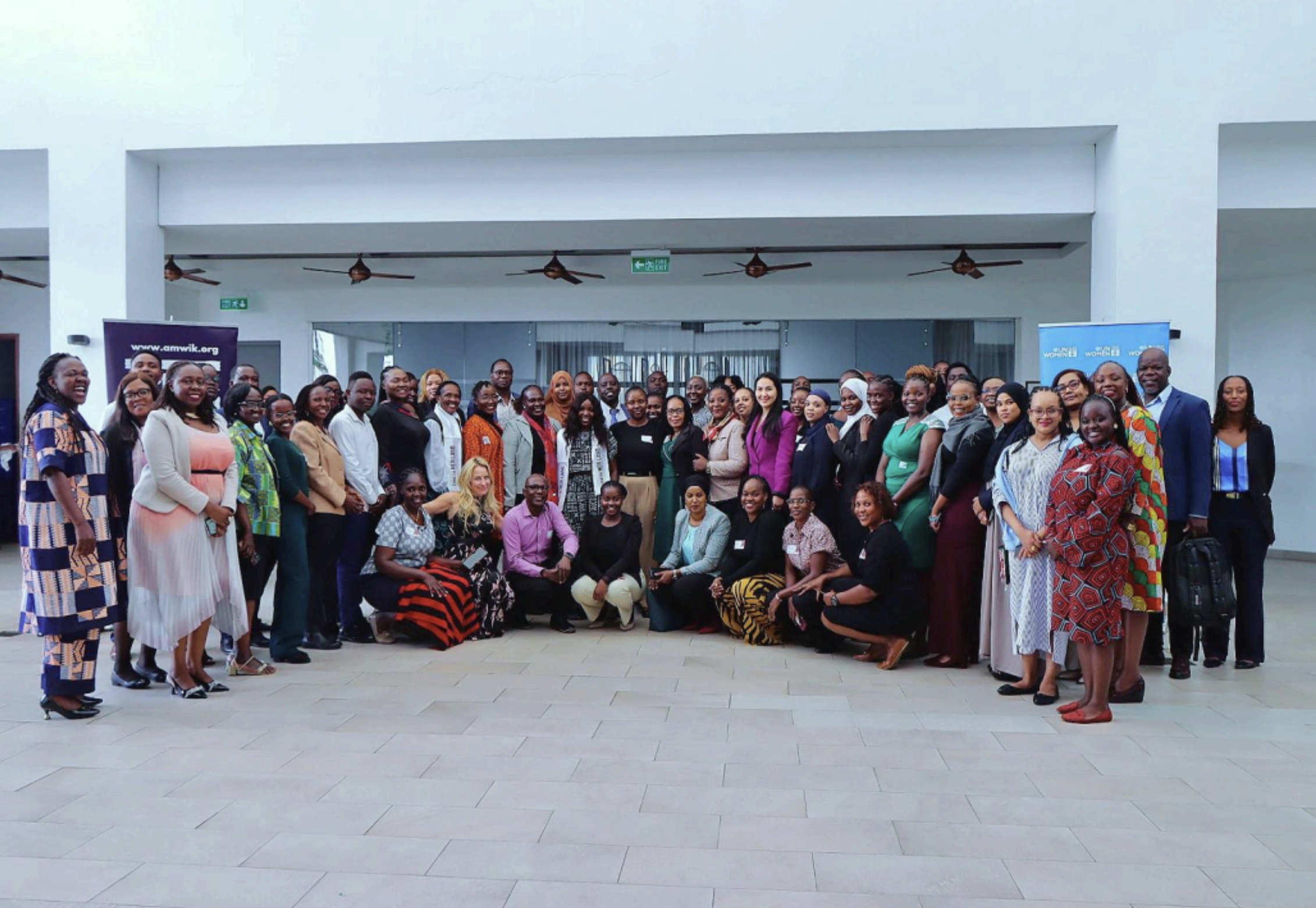
At the #GenerationEquality forum, women changemakers, Media, and Commitment makers from ESA are all for #GenderEquality.
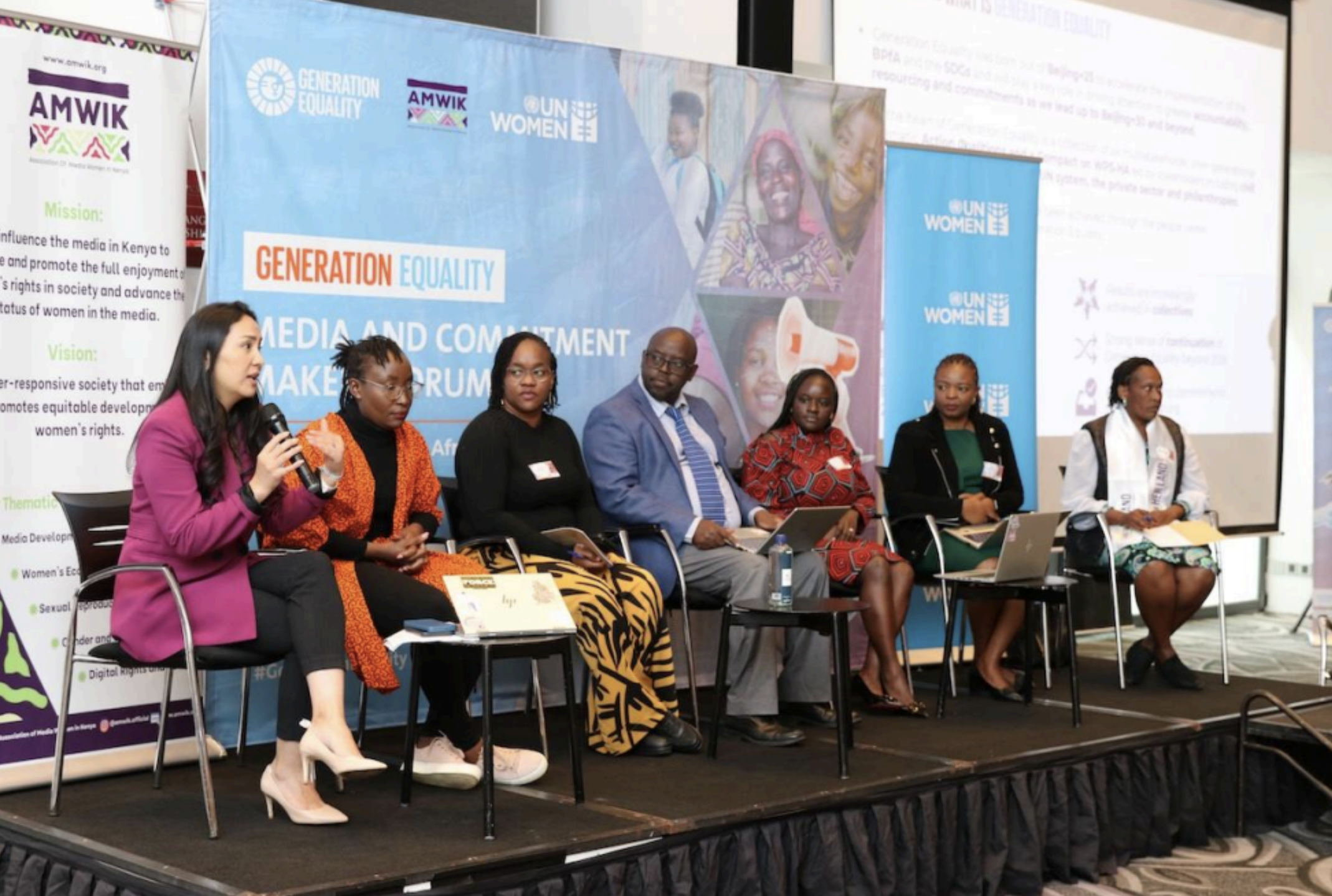
“The way stories are told or not told determines what societies value, what gets funded, and what policies are pursued in action. Anna Mutavati, Regional Director for ESA at UN Women.”

By: Deborah Akech Kuocnin Manyiel, Nalafem Fellow, South Sudan.
The 69th Session of the Commission on the Status of Women (CSW69), held from March 11-22, 2025, in New York City, was a remarkable testament to the power and resilience of women worldwide. Under the theme “Advancing Gender Equality: 30 Years Since the Beijing Platform for Action.”
The first significant event I attended was the event took place at Columbia University and where there was a gathering of extraordinary minds and influential women leaders committed to driving meaningful change.
Being in the same room with Secretary Hillary Clinton and other high-profile women leaders was profoundly inspiring. They shared their insights and experiences, reflecting on the progress made since the landmark Beijing Declaration and Platform for Action in 1995. Their stories of perseverance and leadership serve as a beacon of hope and a reminder of the strides made over the last three decades, emphasizing the importance of continued effort to achieve true gender equality. The women leaders who were panelists alongside Secretary Hillary Clinton were among others President Ellen Johnson Sirleaf, the former President of Liberia and President Barchelet, former President of Chile.
Another significant highlight of the conference was “Sudan Solidarity Night” organized by Nalafem Collective in collaboration with the New York University. This event provided a poignant platform to express our unwavering support for women in Sudan, who endure unimaginable hardships as victims of a war not of their making. It was a night filled with emotion and determination, reinforcing our collective responsibility to advocate for their rights and amplify their voices within the African continent and on the global stage.
The Nalafem team, with whom I proudly collaborate, had the honor of meeting Ambassador Fatima, the African Union’s Permanent Representative to the United Nations. Our bilateral discussions were crucial in fostering international cooperation to address gender inequities. Ambassador Fatima’s perspective was invaluable, offering profound insights into strategies for amplifying women’s voices in international policy-making and ensuring their rights are integrally protected. She emphasized the importance of South Sudan and Sudan women working together given our shared history of struggles.
Moreover, representing the Nalafem Collective as a panelist in an event organized by Global Action for Care was a profound experience. The panel delved into how feminist movements have significantly influenced caregiving discussions, highlighting the essential role these movements play in redefining caregiving as a critical component of gender equality. It was an eye-opening exchange of ideas on how to better support caregivers, predominantly women, and recognize their vital contributions to society.
In addition to my primary engagements, I have also attended several significant side events that have enriched my understanding and appreciation of women empowerment. These experiences have provided valuable insights into the challenges and opportunities women face, strengthening my commitment to advocating for gender equality.
CSW69, with its vibrant discussions and strategic collaborations, was more than a conference; it was a necessary dialogue pushing us toward a more equitable future. As we move forward, inspired by the formidable women who have paved the way, we are reminded of the vital work still to be done and our collective power to reshape the narrative for generations to come. This event was a powerful call to action, one that I was honored to be a part of.

By Nellie Chepkemoi (Nalafem Collective)
On 9th April 2025, the Nalafem Collective took part in a regional roundtable meeting held in Nairobi by the Embassy of Norway and DG ECHO at their offices in Delta Towers, Waiyaki Way, Nairobi. The meeting was focused on seven high-risk countries prone to escalated Gender-Based violence in the face of shrinking donor support and funding. The countries include Burundi, Mozambique, South Sudan, Somalia DRC, and Ethiopia.
Community-based organizations and Survivor alliances urgently testified on the impacts felt at the grassroots levels in Sudan, Burundi, and the DRC amid funding cuts. One social enterprise that had essentially delivered approximately 10,000 GBV-related services had been forced to shut down. Some of the essential services that were being offered included safe houses for victims, mental health support, case management, and legal services. The survivors are turned away due to a shortage of resources to facilitate the delivery of the services.
Many of the participants were in agreement that GBV services are equally essential and should be Non-Negotiable. This includes safe houses, psychosocial support, as well as case management.
It was agreed that the coordination within the GBV clusters, especially in the conflict-affected regions like in DRC and Sudan, should be strengthened. The real-life stories were traumatising: a young girl was trafficked from Burundi to Saudi Arabia after she was sexually assaulted.
Nalafem Collective calls on donors and allies to centre all the survivors in their decisions, the non-negotiables i.e, Availability of funding to Young Feminist Organizations & women-led organizations, funding availability, Mental health services, advocacy on coordination within the protection clusters, and unwanted teenage pregnancies and marriages.

Sharm El-Sheikh, November 17, 2022
On November 16, 2022, Nalafem took part in the roundtable “Connecting climate and social justice leaving no one behind” at the SDG Pavilion, as part of the United Nations Climate Change Conference (COP27), currently held in Sharm El-Sheikh, Egypt.
On the occasion of launching the ZOVU, a platform that allows activists to connect and learn about different approaches to similar problems, and supports community and citizen actions; activists from Africa, Asia and Latin America, were invited to discuss the challenges they encounter while defending climate and social justice. The five activists Siouar Doss, Nala Feminst Collective (Africa), Andela Mendes, Chico Mendes Committee (Brazil), Halima Nyota, Social Justice Movement (Kenya), Disha Ravi, Fridays For Future (India) and Alejandra Téllez, Climalab (Colombia), also shared their community stories, discussed and presented the methods they use to demonstrate impact.
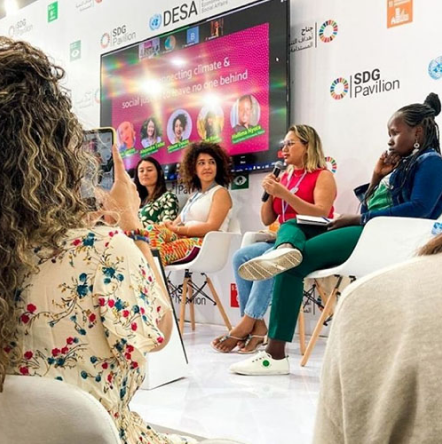
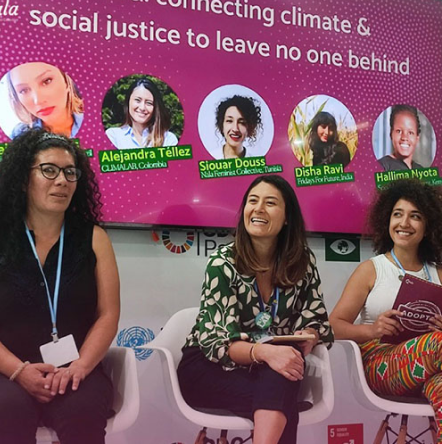
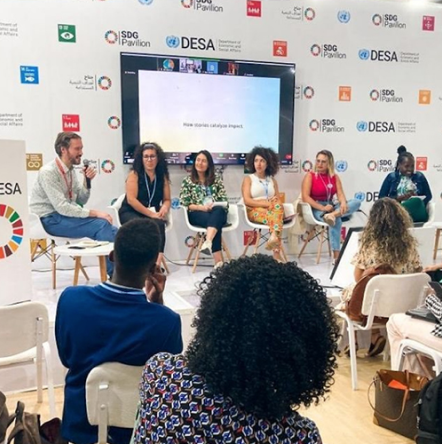
The roundtable discussed different types of organization and tactics that social change advocates follow and implement, in order to create impact and reach social justice within their communities. It highlighted the importance of storytelling in all its forms (written, visual and oral) to advocates for those who are suffering and do not have access to platforms.
Nalafem Coordinator, Siouar Doss started her talk by emphasizing on sharing the same vision as Zovu’s of reinforcing new actions and facilitating activist’s work in order to involve more advocates and encourage citizen actions. She presented the Nalafem work approach as a collective uniting individuals together in one agenda regardless of their philosophies or ideologies, and using multi-track diplomacy. Siouar also stressed on the importance of solidarity, integrational and cross-generational conversations, involving youth and supporting youth-led initiatives, and providing support to other activists and community members in order to achieve our advocacy goals. Hence, a platform that brings change makers together to work collectively is very needed for the demands to become reality.
About Zovu:
Zovu is a platform supporting community and citizen action to build a more just and sustainable world, aiming at contributing to a future where sustainability, social justice and environmental protection are guaranteed. It allows activists to connect with one another and learn about different approaches to similar problems, believing that nobody will fix the world alone and that knowledge sharing and collaboration are key in the journey towards a just society and a healthy planet. Zovu aims to facilitate this by promoting joint efforts and the transfer of know-how among groups.
Visit the website: Zovu

Sharm El-Sheikh, November 15, 2022
Today, the Nalafem delegation met with Hon. Bogolo J.Kenwendo, economist, former Minister of Investment, Trade and Industry in Botswana and a Nala Council member.
During this meeting, Hon Kenwendo acknowledged the challenges faced by the delegation members when trying to advance women rights and environmental awareness in their countries. Yet, she expressed optimism as COP27 itself is a lesson to teach us that challenges are a necessary component of social change processes, and as long as we maintain the momentum and appreciate the accomplishments, challenges will pay off. Hon Kenwendo added that the COP27 being held in Africa this year is a great opportunity for Africans to take the lead. “African Indigenous knowledge & practices are best practice for climate action; proven through the vast natural capital still in Africa & nowhere else. As a result, Africa must lead the climate & sustainability discourse and the world must learn from us’” ~ Hon. Bogolo J.Kenwendo
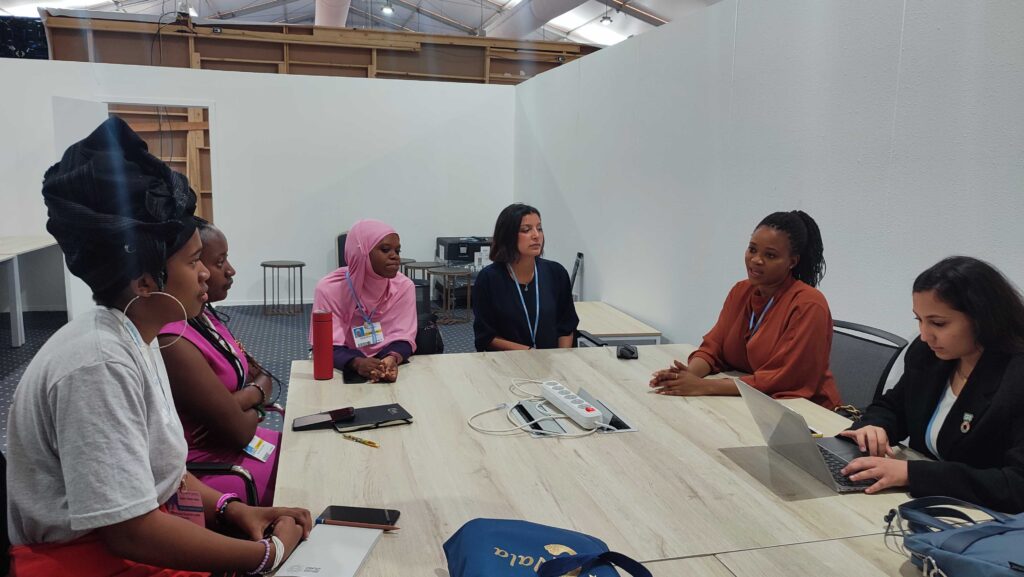
Hon.Kenwendo encouraged the young feminists of the delegation to keep pushing forward by creating and developing African solutions and not give up to setbacks. She highlighted the “Loss and Damage” campaign that made it to the COP agenda for the first time ever, as an example of how African climate champions advocate hard till their voice is heard, their campaign is now discussed on the agenda and financial support is being negotiated.
Delegation member Mthembukazi Bavuma from South Africa, commented on the meeting saying “It was very inspiring to meet Bogolo , and see her excitement for young women to engage in the conference. Her confidence was a boost I needed to validate my participation at COP27, to ensure that my opinion matters and to not take myself for granted”.
Additionally, Zuhura Ahmadi Shaweji from Tanzania, a Nalafem delegation member added “Meeting Bogolo gave me hope that women can be in high positions of change, and that’s how empowered women empower other women. Regardless of the changes that comes across in this COP and beyond, we need to push ourselves upwards and onwards and continue our advocacy”
As the Minister of Investment, Trade and Industry in Botswana, Bogolo J. Kenwendo implemented reforms to significantly improve the ease of doing business, open up both domestic and international markets, and position the country to succeed in the global value chains as well as the digital economy. During her tenure, she was the youngest Cabinet Minister in Africa and in Botswana’s History. J.Kenwendo is also a vocal advocate for gender equity and protection of children’s rights. She has received global recognition for her work, being appointed as a member of the G7 Gender Equality Advisory Council and recently in her role as UN Climate Change High-Level Champions’ Special Advisor, Africa Director. She played a leading role in delivering a transformative COP27 that aims at accelerating change for the African continent.

Nala Feminist Collective (Nalafem) welcomes the agreement of a ceasefire in the Tigray Region of Ethiopia between the Ethiopian government and Tigray People’s Liberation Front (TPLF) to end the disastrous two-year armed conflict, mediated by the African Union. As Pan-African Feminists, we support the African Union in hosting peace talks to enforce African solutions.
As a collective, we urge the development of accountability mechanisms to guarantee the end of this violent chapter and, bring and sustain lasting peace and harmony for the Ethiopian people. We call for transitional justice and reconciliation for victims of war, and women and girls victims of conflict-related crimes in particular.
As part of the Nalafem ground-breaking feminist political document, Africa Young Women Beijing+25 Manifesto, we demand silencing the guns as a critical issue of concern for young women and girls in Africa. Therefore, we welcome this agreement and call for the meaningful inclusion of women in the peace talks to bring reconciliation and healing to everyone affected by the conflict.
Nalafem stands with Ethiopian women and girls and calls for their effective participation in the peacebuilding and transitional justice processes in accordance with the African Union and the United Nations women, peace and security agenda.
Signed by Nala Council members
Aya Chebbi
Oluwaseun Ayodeji Osowobi
Yassmin Abdel-Magied
Filsan Abdulahi
Kessy Ekomo-Soignet

“I refuse to be a number in development reports, I want to be a subject of my own story”
The 27th United Nations Climate Change Conference (COP27) started on November 6, 2022. Leaders, activists, civil society and governmental organizations are now gathered in Sharm El Sheikh, Egypt, to set up actions to combat Climate Change. With a packed agenda of various panels, talks, discussions and side events about how climate change is affecting women’s lives, the second week of the conference has started with a focus on water scarcity and gender.
On Monday, November 14, the Nalafem organized a panel discussion at the Youth pavilion at COP27. The panelists and delegation members Susan Wavinya Wairimu (Kenya), NgimouVictorine Nchokuno (Cameroon) and Mthembukazi Bavuma (South Africa) discussed the theme of “Investing in Socio-Economic Power of African Women and Girls”.
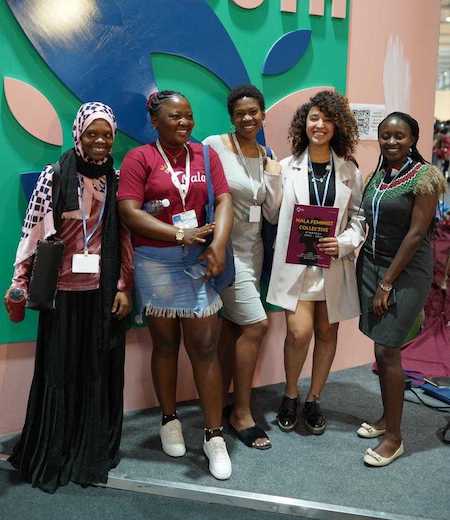
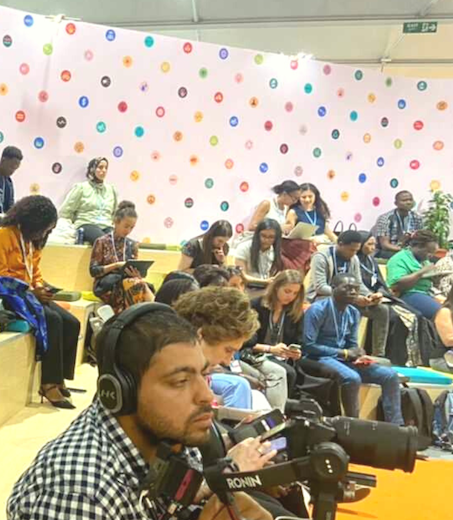
The session moderated by Siouar Douss – Nalafem Coordinator opened the floor for the young feminists to reflect on the unique circumstances African women live, the importance of investing in the socio-economic empowerment of African women to reach an effective climate action. They also discussed the role of African women in forming the continent’s plan for coping with the effects of climate change, from a continental vision to specific local practices, through stories from their own communities.
Cameroonian activist Nigimou Victorine Nchokunoshared young women and girls stories in Cameroon that are subjected to climate hazards, heat waves, floods and droughts, and how this affects the livelihood of women specifically. Nigimou explained how women are disproportionately experiencing the effects of climate change, while poverty exposes them to early marriage and gender-based violence in local and indigenous communities in Cameroon.
In turn, Kenyan Women’s rights and climate advocate, Susan Wavinya Wairimu, addressed how women’s social roles are becoming more demanding as a result of the climate crisis, which can only keep women out of public places. She addressed the issue of teenage pregnancy highlighting her own story of having a child at the age of 17, and the inspiration behind founding “Inspire Teenagers Foundation (ITF)” a community-based organization that is seeking to mentor and educate adolescent girls and young women on matters of sexual and reproductive health and life skills. Susan added that she faced many challenges being a young teen mother, and will keep working hard to provide constant support to teenagers and empower them to be future leaders in their countries instead of being numbers in sustainability reports, changing the narratives from being victims to being subjects stressing on the importance of education to change the victims’ status to be the heroines of their own stories.
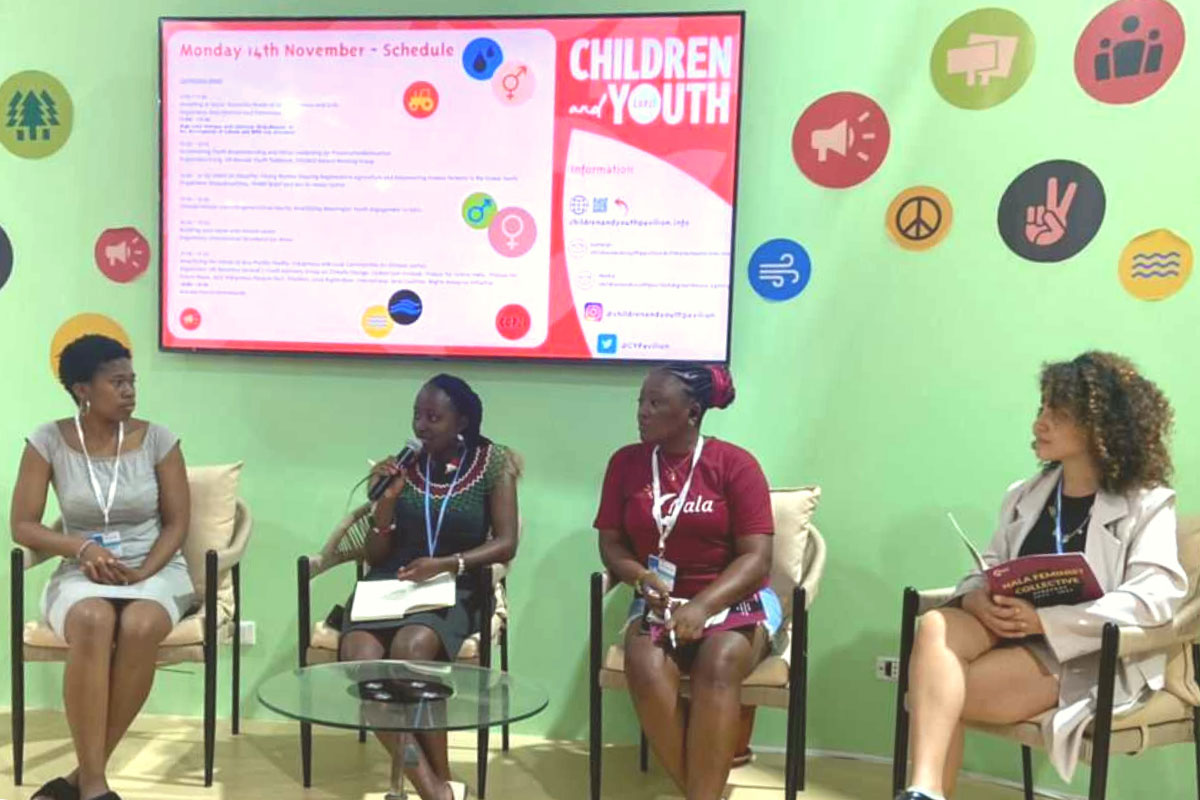
Climate activist Mthembukazi Bavuma (South Africa) shared stories from local communities in her country, and how she engages communities on the social, economic, and environmental injustices they face. She explained how the electricity shortage in South Africa adds to the mental charge of women and requires them to manage limited resources in the household which confines them in a non-ending survival mode, and how being in this state of survival holds women from preventing gender-based violence against them. Additionally, Mthembukazi stressed on the significance of discerning between harmful and insightful African traditions, highlighting that it is the only way of retrieving the preserved knowledge that Africans carried out for centuries to benefit the world and protect the planet.
The panel was organized by Nala Feminist Collective (Nalafem), and moderated by Siouar Douss, Nalafem Coordinator.
